Weigh It Raw (Not Cooked)
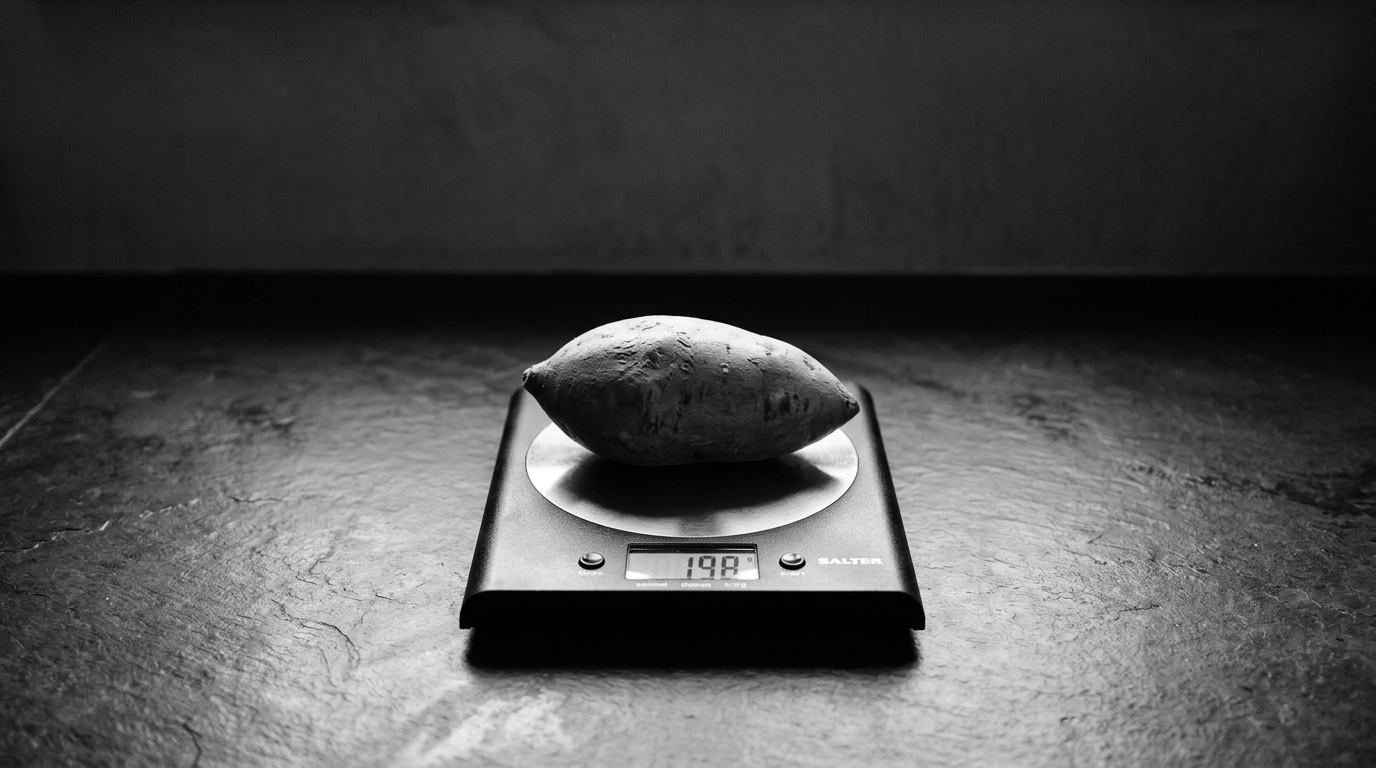
A food scale is the most honest tool in your kitchen. It never rounds up, and it never fibs about the peanut butter. There's still one place it quietly gets you, and it has nothing to do with the scale being wrong.
The Scale Beats the Cup and the Eyeball
A measuring cup tells you how much space your food takes up. It says nothing about how much food is actually in there. A cup of chicken packed tight and a cup packed loose are two different amounts. A tablespoon of peanut butter can swing by half depending on how you scoop it.
Eyeballing is looser still. Most people underestimate how much they’re eating, and the gap grows with the calorie-dense stuff, the oils, the nut butters, the cheese. Those are the exact foods where being off by a little costs you a lot.
A scale skips all of that. Grams are grams. You put the food down, you read the number, and the guessing is over.
A cup measures how much space your food takes up. A scale measures how much food you actually have.
Eyeballing Is the Goal, Not the Enemy
Here’s the part I want you to hear, especially if you’re just starting. The goal is to eyeball your food one day. I want you to look at a plate and know, without a scale, roughly what’s on it. That skill is real, it’s freeing, and most people I coach get there.
You get there by weighing first. The scale is training your eyes. Every time you weigh 150 grams of chicken, you teach yourself what 150 grams looks like, so that six months from now you don’t need the scale to know. People who skip it and “just eyeball” from day one aren’t skilled. They’re guessing, and usually guessing low.
So the scale is temporary, the training wheels that make the skill possible. You use it now so it can retire later.
Where Everyone Gets Tripped Up: Raw vs Cooked
This is the one that sounds complicated and isn’t. Stay with me for four sentences.
Meat loses water when it cooks. Chicken breast loses roughly a quarter of its weight, so 200 grams of raw chicken cooks down to about 150 grams on the plate. The exact loss depends on the cut and how hard you cook it, but a quarter is a fair rule of thumb. The calories don’t leave with the water, they just pack into a smaller pile. Same calories, just less of it.
Now the trap. Your plan says 200 grams of chicken, and that number is raw. It cooks down to about 150 grams, so 150 grams on the plate is your real target. Weigh 200 grams of cooked chicken instead and you’ve eaten about a third more than you meant to. It’s quiet, it happens every meal, and it adds up.
The Rule That Fixes It: Weigh It Raw
Weigh it raw. Raw weight is the one number that doesn’t move. The same chicken breast weighs one thing raw, then something different depending on whether you grilled it, baked it, or pan-fried it dry. Raw stays put, so raw is the number you can trust and repeat tomorrow.
Sometimes you can’t weigh it raw, like a meal someone else cooked or a batch already sitting in the fridge. That’s fine. Find a calorie number labeled “cooked” and weigh the cooked food against it. The rule underneath both is the same: your number and your food have to be in the same state. Raw number, raw food. Cooked number, cooked food. Don’t cross them.
One more thing, so it doesn’t surprise you. Meat shrinks because it loses water. Rice, pasta, and oats do the opposite, they soak water up and get heavier. Sweet potatoes depend on the method, roasted loses water, boiled stays closer to even. You don’t have to memorize the direction for every food. You just have to keep raw with raw.
- Weigh, don’t guess. A scale sees what a cup and your eyes can’t.
- Default to raw. It’s the one weight that stays the same no matter how you cook it.
- Match the state. Raw number with raw food, cooked with cooked, never mixed.
- Aim for your eye. You weigh now so you can trust your judgment later.
You weigh it now so that one day you won’t have to.