Keep One Foot In (Why Growth Doesn't Mean Abandoning Comfort)
You've probably heard that comfort is the enemy of progress. That if you want to change, you have to get uncomfortable and stay there. I understand why that idea sticks. It sounds disciplined. It's also a big part of why so many diets fall apart by week three.
The Half-Truth
There’s some truth in it. If you never try anything new, nothing changes. Nothing changes if nothing changes.
But adding discomfort and removing comfort entirely are two very different things. Most plans treat them as the same. They ask you to throw out everything you know, the takeout, the dessert, the Friday night routine, and replace it overnight with a way of eating that feels completely foreign.
If constant discomfort were the answer, everyone who has ever been on a diet would be fit. The reality is, most people on diets are miserable. And miserable doesn’t last.
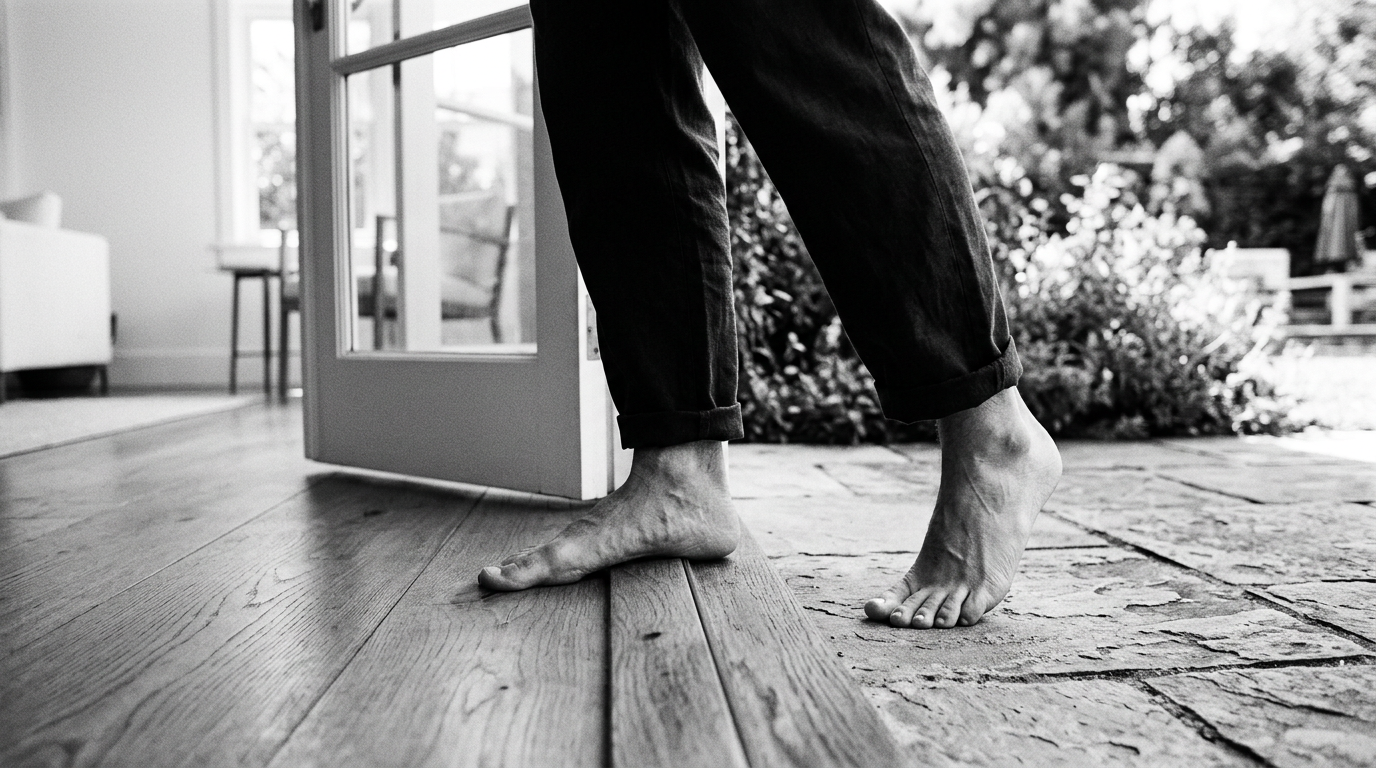
What works better for most people is simpler. Step outside your comfort zone, and keep one foot inside it. A little change, paired with a lot of familiarity. That combination is what makes change feel possible instead of punishing.
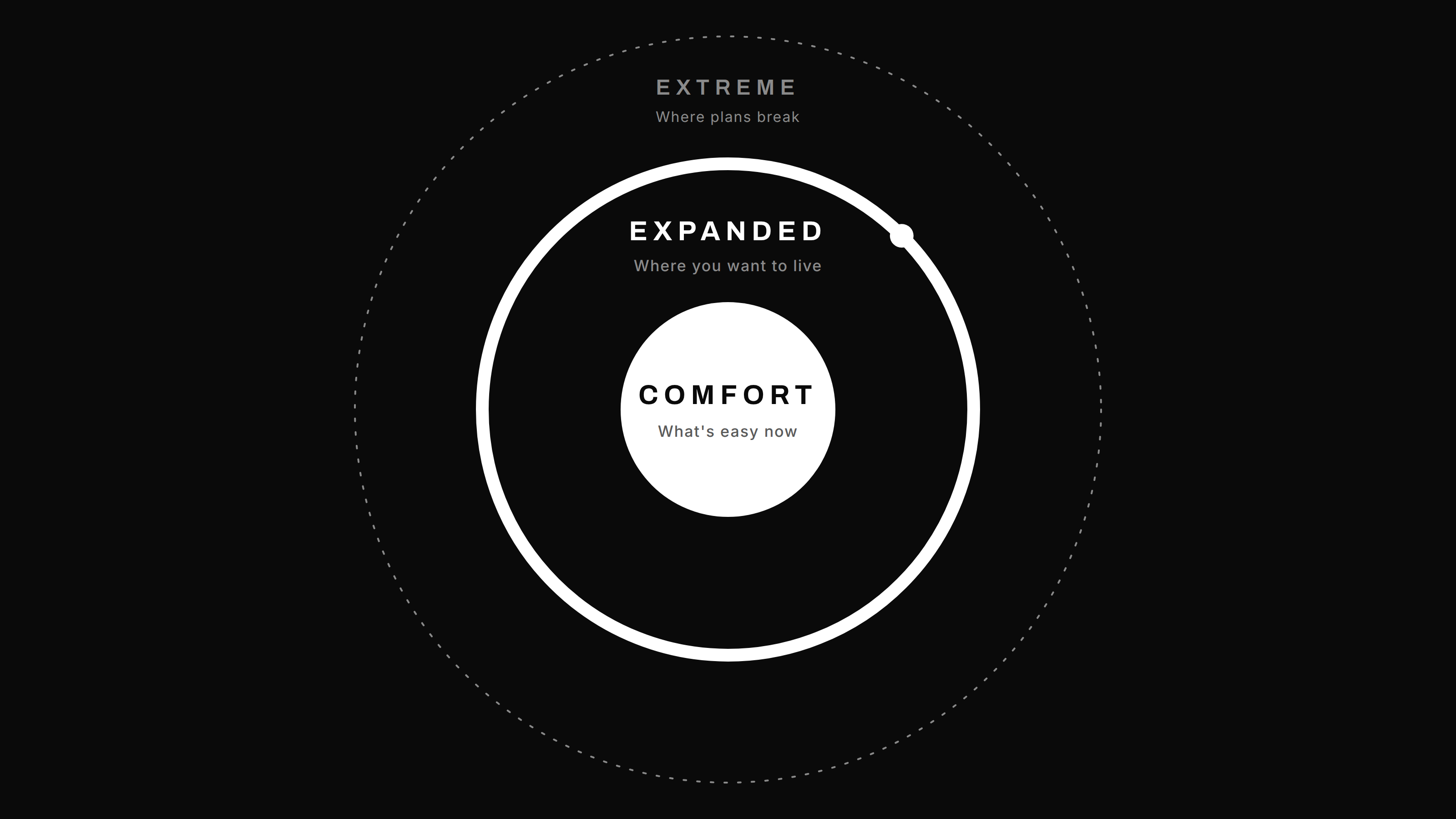
Picture three rings.
The center is your comfort zone. This isn’t a verdict on how you look or feel right now. It’s just what’s easy. The habits you fall into without thinking about them. Maybe that’s takeout three nights a week and something sweet after dinner. There’s a reason you eat the way you do, and trying to abandon all of it at once rarely works.
The middle ring is your expanded comfort zone. This is where you want to live. It holds some of what you already know and a lot more of what’s good for you. You don’t leave the center behind. You build around it, until your old habits become a smaller share of how you eat and live. Some you’ll drop on your own. Some you’ll keep. Both are fine.
The outer ring is the extreme zone. Too much change, too fast. Strict restriction, detoxes, cutting out whole food groups, and the guilt that shows up every time you slip. Both outer rings are uncomfortable. The difference is that one stretches you and the other wears you down.
Keep one foot in what you know. That’s what gives the other foot permission to move.
A Little Nervous Is a Good Sign
There’s an old idea in psychology, often traced back to a 1908 study by Robert Yerkes and John Dodson, that usually gets summarized like this: a little pressure tends to help performance, and too much tends to wreck it.1 I want to be honest that the tidy “inverted U” version you’ll see online is a simplification of what they actually tested, and researchers still debate the details. But the general shape matches what I see with clients almost every week.
Feeling a little nervous about a change is good. It means it matters to you and it’s actually stretching you. Feeling anxious, overwhelmed, and stressed every single day is a different signal. At that point there’s no room left for a new habit to take hold. You’re just trying to survive the plan.
So a better question than “how hard can I go?” is this one: can I still see myself doing some version of this six months from now?
What Expanding Actually Looks Like
Expanding your comfort zone doesn’t mean giving up the foods you enjoy. It means adjusting how they fit.
- Keep the takeout, change the order. Same restaurant, same night. Add a protein, swap a side, skip the extra appetizer.
- Keep dessert, decide how often. Pick the nights ahead of time so it’s a choice you made, not a negotiation you lost.
- Add before you subtract. Get something good on the plate first, a vegetable, a solid portion of protein, a glass of water, before you worry about taking anything away.
- Change one thing at a time. Move to the next habit once the first one starts to feel boring. Boring means it stuck.
A rough target, and I mean rough, not a rule, is living in that expanded zone most of the time, somewhere around 60 to 80 percent, with the rest spent in your old comfort zone. That remaining 20 to 40 percent isn’t you falling short. It’s built in on purpose, because it’s what makes the other 60 to 80 sustainable.
Why This Works When Extremes Don’t
Small wins build confidence. Confidence makes the next day easier to repeat. Repetition is where results come from, and results give you the motivation to take on a little more. That’s the loop.
Extreme plans skip it. They chase the fast result and skip the slow steps that actually make a habit stick, because those steps take time.
I know this one from experience. I played the yo-yo game for years. I’d get motivated, get aggressive, restrict too much, make progress, and then burn out. Sometimes I even reached the goal. But the process had been so hard that I couldn’t hold onto it.
The people I’ve seen succeed with food long term aren’t white-knuckling it. They eat without extremes. They carry less guilt. They have simple ways to manage hunger, and they actually enjoy what’s on their plate.
And over time, something shifts. What once felt like a stretch starts to feel normal. That’s your comfort zone getting bigger. Then you stretch again.
Start With One Foot
Take an honest look at your week. What’s living in your center circle right now? Not to judge it. Just to see it clearly.
Then pick one thing to add. One. Something that stretches you a little and still fits the life you actually live.
You don’t have to leave everything you know to change. You have to make room for more of what you want.
Keep one foot in. Move the other. Repeat.
References
References
-
Yerkes, R. M., & Dodson, J. D. (1908). The relation of strength of stimulus to rapidity of habit-formation. Journal of Comparative Neurology and Psychology, 18(5), 459-482. ↩